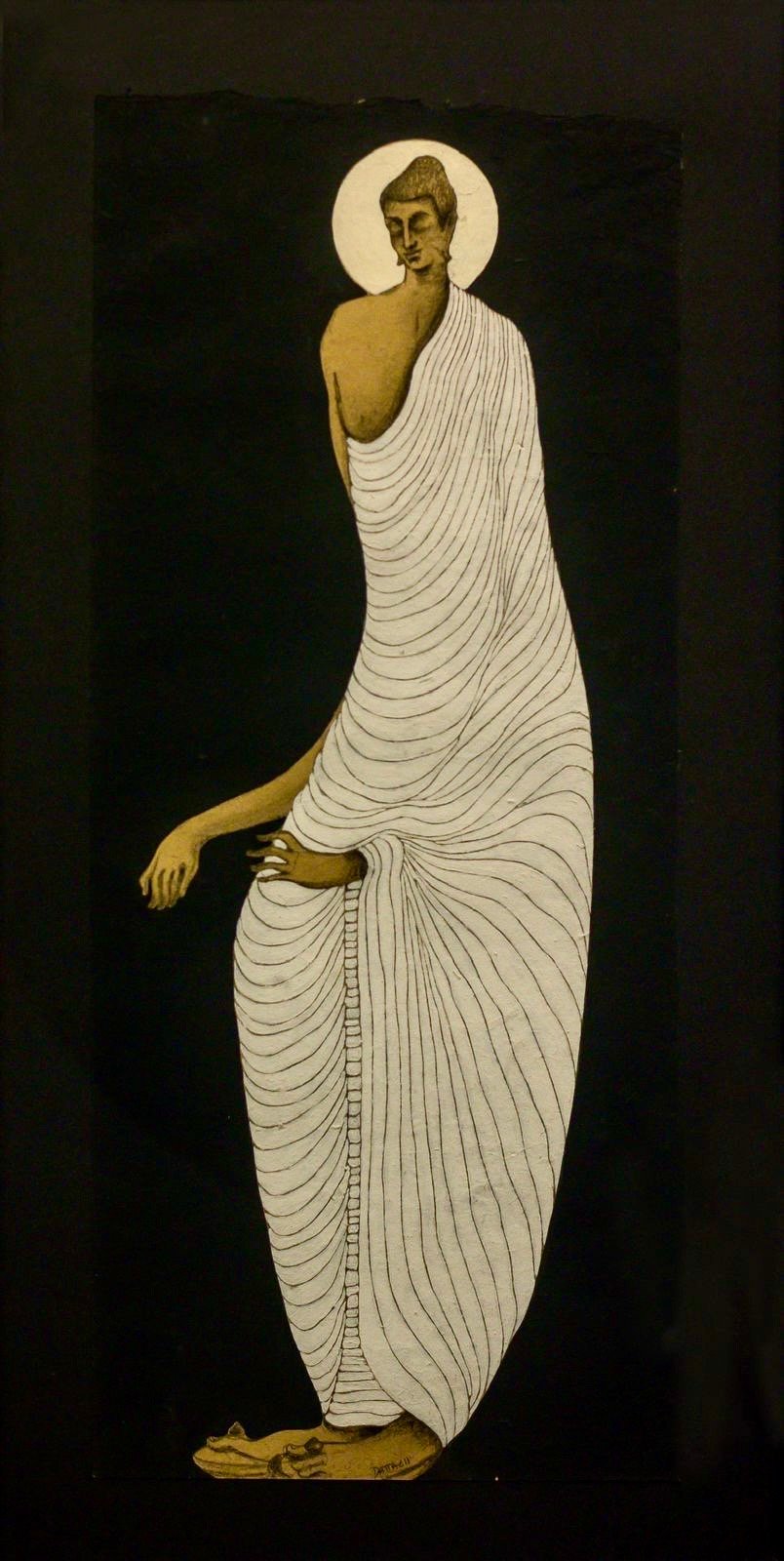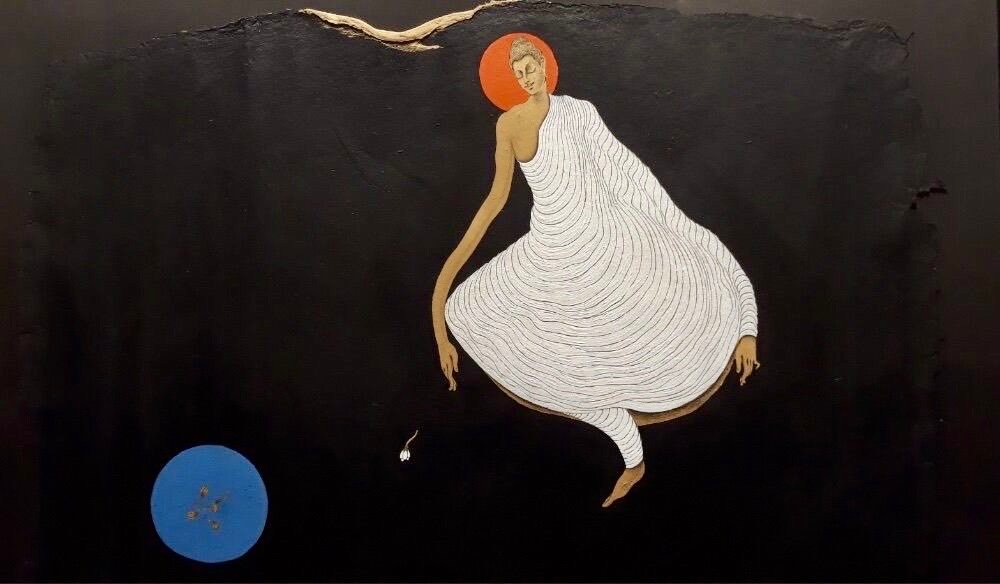
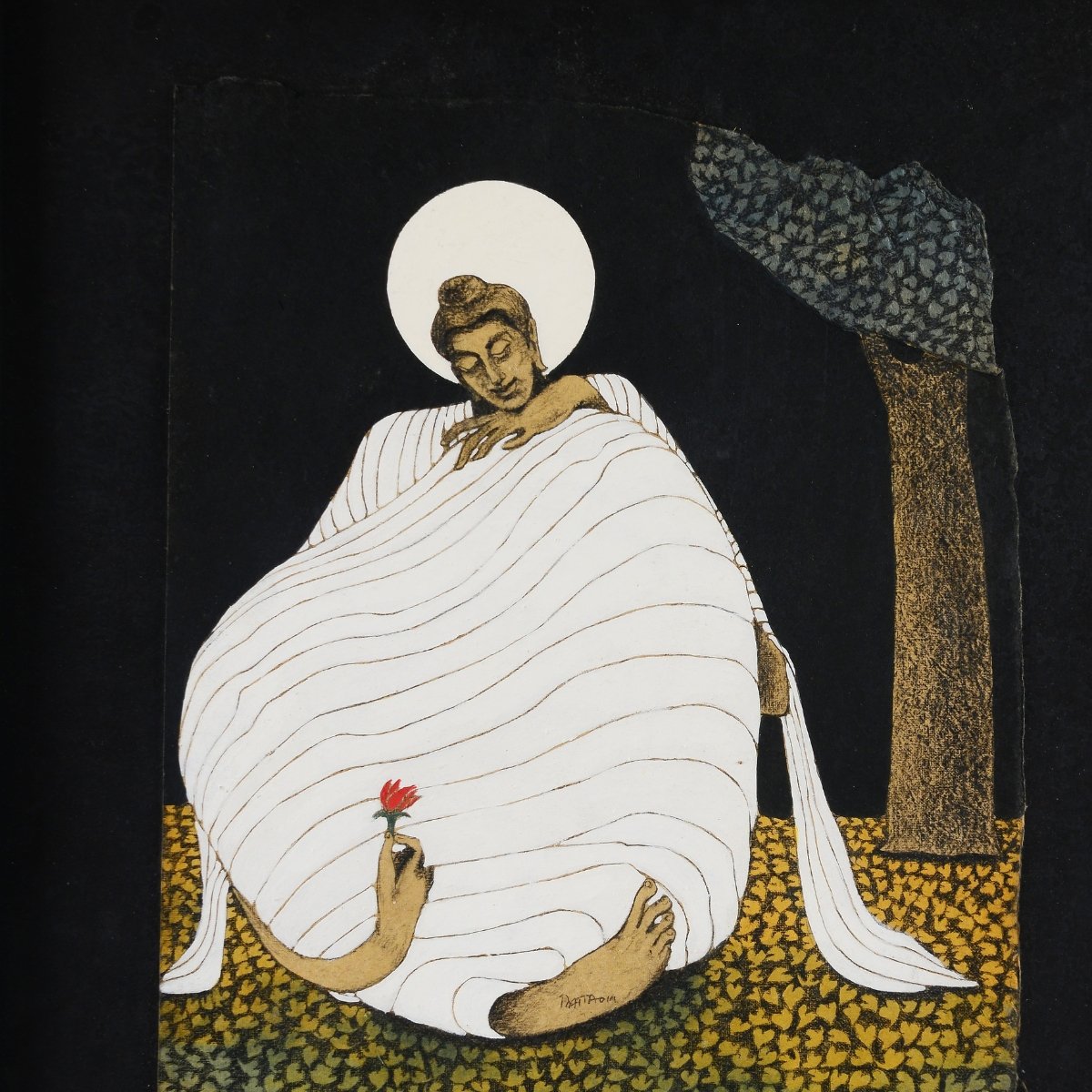
Datta Bansode’s practice evolved from early figurative works in vibrant colours to a more restrained and contemplative visual language. This shift was deeply personal and shaped by his connection to Latur, his hometown, following the devastating earthquake of 1992. Returning to a landscape marked by loss and disruption, and witnessing the quiet grief and trauma of those around him, brought about a profound change in his approach to form and colour. His figures became more simplified, and his palette moved towards muted tones of chalk whites, beiges, and charcoals, resulting in sparse compositions that carried a sense of stillness, introspection, and emotional weight.
In the late 1990s, while reflecting on India’s first nuclear test being code-named “Smiling Buddha,” Bansode began his well-known Buddha series. The contrast between the philosophical ideals associated with the Buddha—peace, compassion, and inner balance, and the implications of nuclear power informed this body of work. His elongated, meditative figures rendered in subdued, monochromatic tones evoke a quiet contemplation, offering a space to reflect on the human condition and the tensions between violence and stillness, fragility and resilience.
Education
Diploma in Arts, Pune
Diploma in Art Education, Sir J.J. School of Art, Mumbai